

A recovery day does not have to mean lying still all day or earning rest only after an especially hard workout. It can be a practical pause between the demands of work, training, family life, and everything else asking for your attention. The best recovery day activities adults choose are usually simple: they help the body feel less tense, give the mind a little space, and leave enough room to enjoy the day.
For some people, recovery means taking the edge off sore legs after a long run or a shift on their feet. For others, it means stepping away from screens, catching up on sleep, or spending an hour somewhere that does not require them to perform. There is no single perfect recovery routine. The right one is the one that meets you where you are.
What a recovery day is really for
Recovery is when your body and mind get the chance to adapt to what life has asked of them. Exercise creates one kind of stress, but so do deadlines, long commutes, poor sleep, caregiving, and carrying tension in your shoulders all week. A recovery day can support physical comfort, but it can also help you feel more settled and present.
That does not mean every recovery day needs to be completely inactive. If you feel stiff from sitting, a little gentle movement may feel far better than staying on the couch. If you are already depleted, though, pushing through a long workout can turn a needed reset into another item on the to-do list. Pay attention to your energy, soreness, mood, and sleep. They often tell you more than a rigid schedule can.
Recovery day activities for adults: start with low-pressure movement
Gentle movement helps many people loosen up without adding more strain. The goal is not to improve your pace, lift heavier, or hit a step count. It is simply to move in a way that feels easy enough to finish with more energy than you started.
A relaxed walk is one of the most useful options. Walk around your neighborhood, take a trail by the water, or make it social by meeting a friend for coffee afterward. Keep the pace conversational. If you are recovering from a demanding workout, this is not the day to turn your walk into an unplanned cardio session.
Mobility work can be equally helpful, especially after desk time, driving, or repetitive physical work. A few slow shoulder circles, hip movements, gentle twists, and ankle rolls may be plenty. Light yoga can work well too, provided it stays restorative. Choose positions that let you breathe and settle rather than forcing deeper stretches.
Easy cycling, a casual swim, or time in a pool may suit people who prefer movement with less impact. The trade-off is simple: if any activity makes soreness sharper, leaves you unusually fatigued, or feels like a test of willpower, scale it back. Recovery should not feel like another hard session in disguise.
Use heat, cold, and rest at your own pace
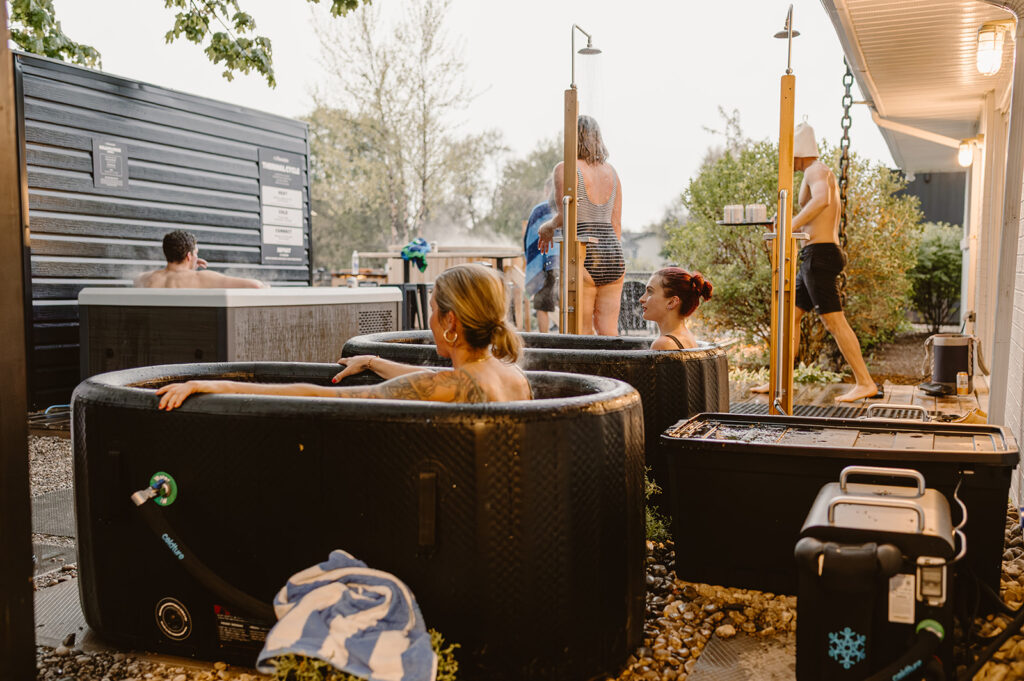
Thermal therapy can make a recovery day feel more intentional without making it complicated. Warmth may help tired muscles feel more relaxed, while a cold plunge can feel refreshing and energizing. Rest between each experience gives your body time to settle and lets you notice what feels right.
At a Nordic spa such as FlowState, guests can move between sauna, cold plunge, hot soaking, and relaxation spaces at their own comfort level. There is no required sequence and no expectation that you need to tolerate an extreme temperature to get something from the visit. Some people enjoy a few gentle rounds of heat, cool water, and rest. Others prefer to spend more time warming up and simply skip the cold plunge.
This flexibility matters. A cold plunge is optional, not a measure of discipline. If you are trying it for the first time, a brief, comfortable exposure can be enough. Focus on slow breathing and leave when your body tells you to. The same goes for sauna time: step out if you feel dizzy, unwell, or overly uncomfortable, then hydrate and rest.
People who are pregnant, have cardiovascular concerns, uncontrolled blood pressure, or are managing a medical condition should check with a qualified healthcare professional before using sauna or cold-water therapy. Avoid thermal sessions when you are sick, dehydrated, or under the influence of alcohol. A good recovery ritual should support your well-being, not ask you to ignore warning signs.
Make space for real rest
Many adults are good at staying busy and less practiced at resting without guilt. A recovery day is a useful place to change that. Rest can be quiet and uncomplicated: a nap, a book, a slow breakfast, time outside, or sitting somewhere without scrolling through the next thing.
Sleep deserves special attention. One late night will not undo all your progress, but consistently short or disrupted sleep makes soreness, stress, and low energy harder to manage. On a recovery day, try giving yourself a calmer evening. Eat a satisfying meal, dim the lights when you can, and put a little distance between your bed and your phone.
You do not have to build an entire spa-like routine at home. Even 20 minutes of undistracted rest can shift the tone of a crowded day. Think of it as making room to recover, rather than trying to optimize every minute of it.
Eat and hydrate in a way that supports you
Recovery is easier when you are not running on empty. After exercise or a physically demanding workday, aim for regular meals that include carbohydrates for energy, protein to support muscle repair, and foods you genuinely enjoy eating. A simple plate might include eggs and toast, yogurt with fruit and granola, rice with vegetables and chicken, or beans with a grain and greens.
Hydration matters too, particularly after sweating in a workout or sauna. Water is often enough, and a drink with electrolytes may be useful after prolonged exercise or heavy sweating. You do not need to overthink it. Sip consistently, have a drink nearby, and notice if thirst, headache, or fatigue are telling you that you need more.
Recovery days are not a time to restrict food because you are exercising less. Your body still needs fuel to manage the work it has already done.
Choose connection when connection helps
Not every reset needs to happen alone. For some people, one of the best recovery day activities is spending relaxed time with people who make them feel more like themselves. Meet a friend for a walk, bring a partner to a sauna session, cook a meal together, or sit with someone without needing a big plan.
There is a useful distinction here: choose connection that restores you, not social plans that leave you more drained. If a quiet solo afternoon is what you need, that counts. If laughter with friends helps you release the week, that counts too. Recovery can be personal and social at the same time.
A simple way to build your own recovery day
Start by asking one question: what feels most depleted right now? If your body feels stiff, choose light movement and warmth. If your mind feels crowded, choose less screen time, a walk, or a quiet rest space. If you feel isolated, invite someone into the day. If you are truly exhausted, let sleep and stillness take the lead.
You might combine a short walk with a nourishing lunch and an early night. Or you might spend a few hours moving gently through heat, cold, and rest, then head home feeling calmer than when you arrived. The details can change each week.
The point is not to create the most impressive recovery day. It is to give yourself a repeatable moment to slow down, listen in, and return to ordinary life feeling a little more comfortable in your body and a little more able to meet what comes next.