

The workday does not always end when you close your laptop, leave the job site, or pull into the driveway. Your body may be home while your mind is still answering emails, replaying conversations, or organizing tomorrow’s to-do list. Stress relief after work is less about forcing yourself to relax and more about giving your nervous system a clear, kind signal that it can shift gears.
That signal looks different for everyone. Some people need quiet. Some need movement, warmth, a good laugh with friends, or 20 minutes with no one asking anything of them. The goal is not to build a perfect evening routine. It is to create a small transition that helps work take up less space in the rest of your day.
Why work stress can linger long after the shift
A demanding day can leave your body feeling switched on. Maybe your shoulders are tight, your jaw is clenched, or you feel strangely restless even when you are tired. For people in healthcare, trades, service work, offices, and busy households, there may be very little space between one responsibility and the next.
Going straight from work mode into dinner, errands, caregiving, or scrolling can make that tension stick around. It is not a personal failure if you cannot simply “turn it off.” Your brain and body often need a transition, especially after a day that required focus, decisions, physical effort, or emotional energy.
A helpful after-work ritual creates a boundary. It can be brief and simple, but it should feel noticeably different from the pace of the workday.
Start your stress relief after work before you get home
The first few minutes after work can set the tone for the evening. Instead of moving immediately into the next task, try creating a little buffer. Sit in your parked car for two minutes before going inside. Walk around the block. Change out of your work clothes as soon as you get home. Put your phone down while you make a cup of tea or fill a water bottle.
These are small actions, but they tell your brain that one part of the day is over. If you commute, consider using the drive as a transition rather than more work time. Silence, a favorite album, an easy podcast, or even a few deep breaths at a red light can be more restorative than another call.
It helps to choose something you can repeat most days. A complicated routine may sound appealing on Sunday, then disappear by Wednesday. A five-minute ritual you actually use is more valuable than an ideal plan that asks too much of you.
Choose the kind of reset your body is asking for
Not every stressful day needs the same response. Before deciding what to do, pause and ask a simple question: do I need to release energy, settle down, or feel cared for?
If you feel wired and restless, gentle movement may help. A walk by the water, a light workout, stretching while dinner cooks, or a few songs of dancing in the kitchen can help you reconnect with your body. This does not need to be a performance or a hard training session. The point is to move out of the mental loop of the day.
If you feel drained or overstimulated, choose less input. Dim the lights, take a warm shower, sit outside for a few minutes, or leave your phone in another room while you eat. Quiet is not always available, especially in a full home, but even a small pocket of it can help.
If your body feels sore after a physical shift or workout, warmth and rest may be the better fit. A hot bath, heating pad, or sauna session can feel especially comforting when your muscles have been working all day. Listen to your comfort level, hydrate, and step out when you have had enough. Recovery should not feel like another challenge to complete.
Make room for hot, cold, and rest
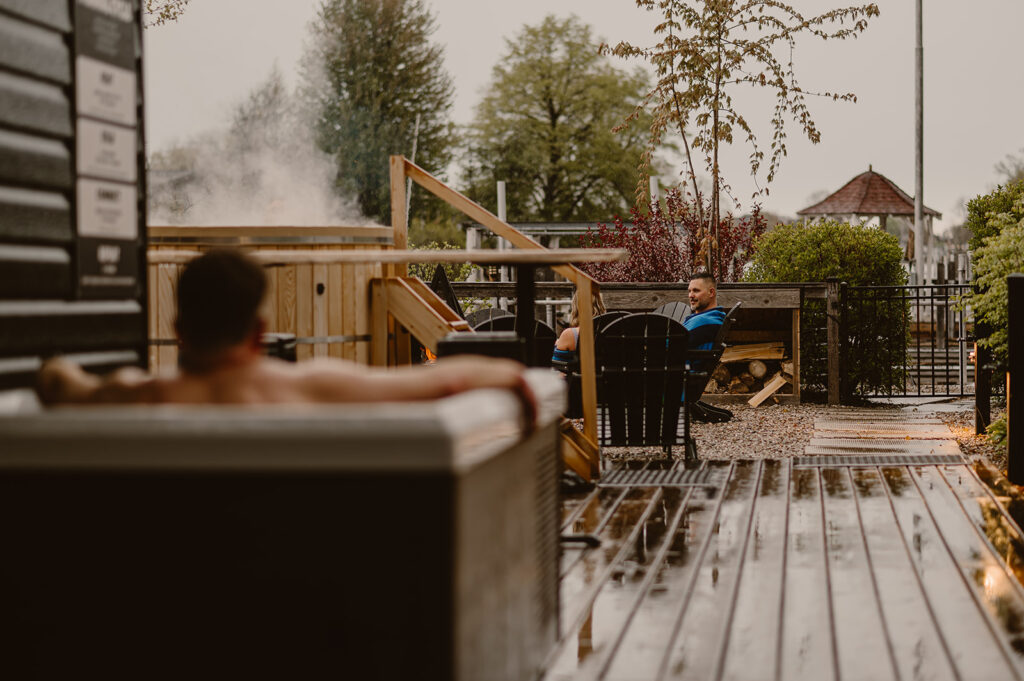
Thermal therapy gives many people a more intentional way to leave the day behind. Time in a sauna can offer warmth, stillness, and a reason to slow down. A cold plunge can feel energizing and clarifying for those who enjoy it. Rest between each phase gives your body time to settle and lets the experience become your own.
There is no required sequence that works for every person. You might enjoy a gentle sauna followed by a cool rinse and a long rest. Someone else may prefer a brief cold plunge, then warmth, then quiet time with water. The best pace is the one that feels manageable for your body, not the one that looks impressive.
For first-timers, starting slowly is more than enough. Spend a few comfortable minutes in the sauna, cool down gradually, and rest. Notice how you feel. If you are considering cold exposure, it is okay to begin with cool water rather than jumping into an intense plunge. People with health concerns, those who are pregnant, or anyone unsure whether heat or cold exposure is right for them should speak with a qualified healthcare professional first.
At FlowState, guests can move through sauna, cold plunge, hot soaking, and relaxation spaces at their own pace. That flexibility matters after work, when your energy can be different from one day to the next. You can come alone for a quieter reset or meet a friend and make recovery part of your time together.
Protect the first hour of your evening
You do not need to avoid every responsibility after work. Real life still includes meals, kids, laundry, pets, and messages that need a response. But protecting even part of the first hour can make the evening feel less like a second shift.
Try choosing one boundary that reduces noise. It might be waiting 30 minutes before checking work email, leaving notifications off during dinner, or saying no to one nonessential task. If your job requires you to remain reachable, make the boundary smaller: take five intentional breaths before responding, or step outside before your next call.
The trade-off is that some tasks may wait. That can feel uncomfortable at first, particularly if you are used to being dependable for everyone. But a rested version of you is still dependable. Creating a little room to recover can make your time with family, friends, and yourself feel more present.
Let connection count as recovery
Stress relief does not have to be solitary. A walk with a partner, an easy dinner with a friend, or a shared sauna session can help you feel less alone after a difficult day. The key is choosing connection that does not require you to perform.
You do not need to turn every get-together into a deep conversation. Sometimes sitting quietly beside someone, laughing about something small, or talking about anything except work is enough. For many people across Windsor-Essex, making a wellness outing part of the week creates a reason to pause before stress becomes the default.
Of course, solitude is valuable too. If you spend your entire workday around people, the most restorative choice may be a quiet room, a book, or a peaceful place to sit without conversation. Both options count. Recovery is personal, and your needs can change from day to day.
Build an evening that supports sleep
A calmer evening does not guarantee perfect sleep, but it can make it easier to settle when bedtime arrives. If possible, finish intense work messages and demanding tasks earlier rather than carrying them into bed. Keep lights lower in the last part of the night, eat enough to feel satisfied, and give yourself a few minutes without a screen.
If your mind is still busy, write down what is waiting for tomorrow. A short list can reassure your brain that it does not need to keep rehearsing everything. Then choose one sensory cue that feels calming: a warm shower, clean sheets, a favorite tea, slow breathing, or quiet music.
The most useful stress relief after work is not necessarily dramatic. It is the practice that helps you return to yourself, even briefly, before the day disappears. Start with what feels possible tonight. A little warmth, a little movement, a little rest, or a little connection can be enough to remind your body that it is safe to slow down.