

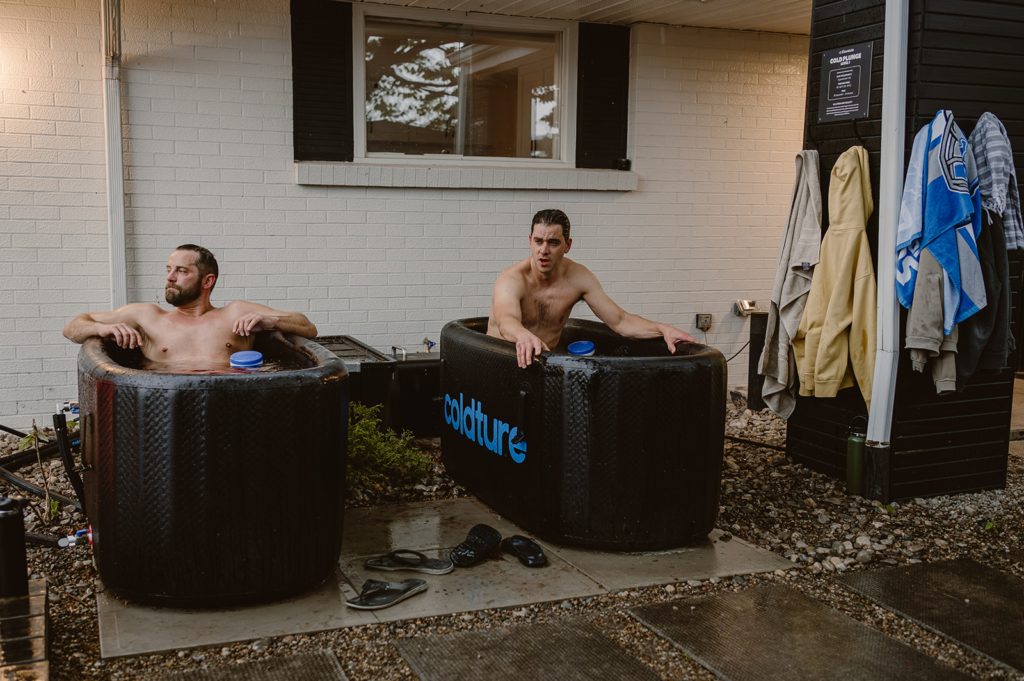
The first few seconds of cold water can feel louder than expected. Your breath may catch, your shoulders may rise, and your instinct may be to get out right away. A simple cold plunge breathing technique gives you something steady to return to: a slower exhale, a softer body, and permission to move at your own pace.
Cold exposure is not a test of toughness. At its best, it can be a chance to practice staying present when your body wants to rush. You do not need to hold your breath, force yourself to relax instantly, or stay in longer than feels right. The goal is simply to find enough calm to make a clear decision about what your body needs.
Why Breathing Changes the Cold Plunge Experience
When you first enter cold water, your nervous system responds quickly. A sharp inhale or fast, shallow breathing is common. This is sometimes called the cold-shock response, and it is one reason a gradual, self-paced entry can feel more manageable than jumping in.
Your breath will not make the water warm, but it can help you avoid adding extra tension to an already intense moment. A long, unforced exhale tells your body that it has time. It gives you a practical focus beyond the temperature and can help your shoulders, jaw, and hands loosen naturally.
There is no prize for looking perfectly calm. Some days, a short dip with a few steady breaths is plenty. On another day, you may feel ready to stay a little longer. Both experiences count.
The Cold Plunge Breathing Technique to Start With
For most first-time guests, the best approach is simple: breathe in gently, then make the exhale a little longer. Think of it as settling rather than controlling.
Before you enter, stand beside the plunge for a moment. Let your breathing return to normal after the sauna, a workout, or a busy day. Take one easy breath in through your nose if that feels comfortable, then release it slowly through your nose or mouth. There is no need for a huge inhale. In fact, trying to take exaggerated breaths can make you feel more lightheaded or tense.
As you lower yourself into the water, expect the first breath to be reactive. That is normal. Rather than fighting it, let the next exhale be slow and audible. You might quietly sigh, hum, or breathe out as though you are cooling a cup of tea. Then repeat: a comfortable inhale, followed by a longer, softer exhale.
A useful rhythm is an inhale of about three seconds and an exhale of about five or six seconds. Exact counting is optional. If numbers make you more anxious, skip them. The feeling you are looking for is simple: your exhale should be easy enough that you could repeat it several times without strain.
Keep your attention on the next breath, not on how long you have been in. If your breath starts to feel more settled, you can decide whether to remain where you are. If it stays panicked, painful, or out of control, that is useful information too. Step out, warm up, and rest.
Let Your Body Position Help
Breathing is easier when you are not bracing against the water. Keep your head above water, let your neck stay long, and avoid hunching your shoulders toward your ears. Relax your hands if you can. A light grip on the edge is fine, especially when you are new, but try not to clench.
Many people find it more comfortable to enter slowly, pausing at the knees or waist before lowering farther. Others prefer a quicker, smooth entry because lingering makes the anticipation worse. It depends on the person. The right approach is the one that lets you breathe steadily and exit safely.
What Not to Do in the Cold Water
A cold plunge is not the place for advanced breath-holding practices, hyperventilation, or competitive challenges. Avoid rapid, forceful breathing meant to create a buzzing or energized feeling. It can make you dizzy, and dizziness around water is never something to ignore.
Do not intentionally hold your breath underwater. Keep your face above the surface, especially while you are still adapting to the temperature. If you notice chest pain, severe dizziness, confusion, numbness that concerns you, or breathing that does not settle, leave the water and ask for support.
It is also wise to skip cold plunging when you are sick, dehydrated, overtired, or under the influence of alcohol or drugs. People who are pregnant or have a heart condition, uncontrolled blood pressure, circulation concerns, respiratory conditions, or any health question that may affect cold exposure should speak with a qualified health professional first.
A Simple Breath-by-Breath First Plunge
Your first cold plunge does not need a complicated routine. You might begin with a few minutes of gentle warmth in a sauna, followed by a short rest and water. When you feel ready, approach the plunge without rushing.
Enter to a depth that feels manageable. Once you are in, let the first surprised breath happen. Then place your focus on your exhale. Try three to five slow breaths before deciding what comes next. You may stay for a little longer, or you may step out after those breaths. Either choice can be a successful first experience.
Afterward, do not race to the next station. Give yourself a few moments to stand, breathe, and notice how you feel. Dry off, sip water, and rest somewhere comfortable. Your body may naturally warm over the next few minutes. If you are using a thermal cycle, you can return to a sauna or warm soak when you feel ready, but there is no required sequence.
At FlowState, this flexibility is part of the experience. Some guests enjoy several gentle hot-cold-rest rounds. Others prefer one brief cold plunge followed by a long, quiet rest. The value is not in following someone else’s formula. It is in building a rhythm you are comfortable returning to.
Should You Breathe Through Your Nose or Mouth?
Either can work. Nose breathing may feel calming for some people, especially before entering the water or once the initial shock has passed. Mouth breathing can feel more natural during the first few seconds, when your body wants a bigger release of air.
Instead of treating one method as correct, choose the one that helps you stay relaxed and unstrained. A slow mouth exhale can be especially useful when the cold feels intense. Over time, you may naturally shift toward quieter nasal breathing, but it is not a requirement.
The same goes for sounds. A soft sigh, hum, or whispered exhale is completely fine if it helps you avoid holding tension. You are not disturbing the process by making noise. You are giving your body a way to settle.
How Long Should You Stay?
Breathing should guide the answer more than a timer. For a beginner, the first goal may be no more than a few calm breaths. That is enough to learn how your body responds. You can build familiarity over multiple visits rather than trying to accomplish everything in one session.
Experienced plungers may choose longer exposure, but longer is not automatically better. Cold can be a useful part of recovery and stress relief, yet it also creates stress for the body. The best dose depends on your experience, health, the water temperature, how you slept, how hard you trained, and how you feel that day.
A good rule is to leave the water while you still feel capable and clear. You want to finish feeling refreshed, not depleted or proud that you ignored your body’s signals.
Make It a Practice, Not a Performance
The most helpful cold plunge breathing technique is the one you will actually use when the water feels intense: an easy inhale, a longer exhale, and a willingness to step out when needed. It is less about conquering discomfort and more about meeting it with a little curiosity.
Bring that same approach into the rest of your day. Take a slower breath before a difficult meeting, after a hard workout, or when you finally get a quiet moment to yourself. Sometimes recovery begins with nothing more complicated than noticing your breath and giving yourself permission to slow down.